


Safe and enriching environment for everybody.
| MMonday | Open 24 Hours |
| TTuesday | Open 24 Hours |
| WWednesday | Open 24 Hours |
| TThursday | Open 24 Hours |
| FFriday | Open 24 Hours |
| SSaturday | Open 24 Hours |
| SSunday | Open 24 Hours |
Lycian Way (Likya Yolu) – Hiking Trail in Türkiye
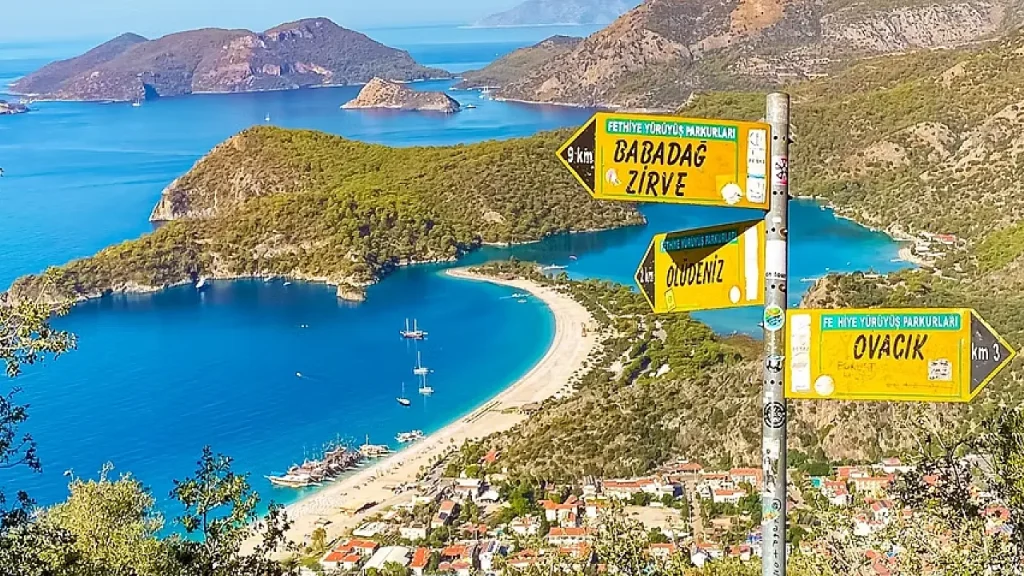
Stretching along the dramatic southwestern coastline of Türkiye, the Lycian Way (Likya Yolu) is one of the world’s most scenic long-distance hiking routes. Following ancient footpaths, mule tracks, and coastal trails, it traces the heart of ancient Lycia, where mountains plunge into the Mediterranean and history unfolds at every step.
The route extends approximately 520 km, beginning near Hisarönü (Ovacık) close to Fethiye and ending in Konyaaltı, near Antalya. Marked with red and white stripes following the international Grande Randonnée (GR) system, the Lycian Way is clearly signposted and accessible to both experienced hikers and well-prepared beginners.
More than a trail, the Lycian Way is a journey through time—connecting remote villages, forgotten ruins, pine forests, high mountain passes, and secluded coves where the sea shimmers below steep cliffs.
Quick Facts
Location: Southwestern Türkiye
Length: Approximately 520 km
Start: Ovacık (Fethiye)
End: Konyaaltı (Antalya)
Type: Long-distance hiking trail
Known for: Coastal views and Lycian ruins
Historical Background
Lycia was an ancient region located on the Teke Peninsula, inhabited since prehistoric times. The Lycians formed one of the earliest democratic confederations of the ancient world, known as the Lycian League, which later influenced Roman political systems.
Along the route, hikers encounter remnants of Lycian city-states such as Xanthos, Patara, Myra, Tlos, Pinara, Olympos, and Phaselis. Rock-cut tombs carved high into cliffs, monumental sarcophagi, and ancient roads bear witness to centuries of Lycian, Persian, Greek, Roman, Byzantine, Seljuk, and Ottoman presence.
Walking the Lycian Way means literally following paths used for trade, defense, pilgrimage, and daily life over thousands of years.
Trail Overview & Route Character
The Lycian Way alternates between coastal paths, mountain ridges, forest tracks, and village roads. Some sections are demanding, with steep ascents and descents, while others offer gentle walks with panoramic sea views.
Key characteristics include:
Well-marked paths renewed regularly by volunteers
Daily stages ranging from short walks to challenging full-day hikes
Accommodation options in villages, pensions, campsites, and seaside lodges
Opportunities to swim almost daily in warmer months
Certain segments are also suitable for mountain biking, especially where forest roads run parallel to hiking trails.
Best Time to Visit
The best time to hike the Lycian Way is April–June and September–October.
Spring: Wildflowers, flowing streams, mild temperatures
Autumn: Warm seas, golden landscapes, fewer crowds
Summer: Very hot and demanding; suitable only for short coastal sections
Winter: Snow possible at higher elevations; some sections become inaccessible
Early mornings are ideal, especially in warmer months.
Tours & Trekking Options
The Lycian Way can be explored in several ways:
Independent trekking, stage by stage or in full sections
Guided hiking tours, usually 7–10 days, with luggage transfer
Village-to-village walks, focusing on culture and local life
Coastal day hikes, ideal for travelers based in Fethiye, Kaş, or Olympos
Guided tours often include accommodation, meals, transport, and cultural interpretation, making them suitable for first-time hikers.
What to Pack (Essentials)
Hikers should be well prepared. Essential items include:
Sturdy, breathable hiking boots
Lightweight, quick-drying clothing
Sun protection (hat, sunscreen, sunglasses)
Rain jacket and spare layers
Backpack, water bottles, snacks
Swimsuit and towel for coastal sections
Navigation apps, offline maps, and a basic first-aid kit are strongly recommended.
Nearby Highlights Along the Route
Ölüdeniz – Famous for its turquoise lagoon
Butterfly Valley – Dramatic cliffs and untouched nature
Kabak Bay – Remote bay popular with hikers
Patara – Lycian capital and long sandy beach
Kaş – Lively harbor town and trail hub
Demre – Myra and St. Nicholas Church
Cape Gelidonya – Iconic lighthouse and dramatic cliffs
Why Walk the Lycian Way?
The Lycian Way is not just about distance or endurance—it is about connection. To landscapes shaped by wind and sea, to villages where hospitality is instinctive, and to civilizations that once thrived along these shores. Each step offers both physical challenge and quiet reward.
For hikers, history lovers, and slow travelers, the Lycian Way remains one of Türkiye’s most meaningful journeys.
Browse The Map
Reviews And Comments
Suggested Listings
Kıyıkıslacık – Iasos Ancient City, Milas

Kayaköy (Levissi) Abandoned Village – Muğla

Gökova, Ula District, Muğla

Not rated yet.
Why don't you register your impressions?