


Contact
- Osmangazi Mahallesi, Uzun Çarşı Caddesi, 16010 Osmangazi, Bursa, Türkiye
- info@allabouturkiye.com
- kozahan.org
Where Bursa's Silk Road Heritage Lives On
| MMonday | 08:30 AM - 19:00 |
| TTuesday | 08:30 AM - 19:00 |
| WWednesday | 08:30 AM - 19:00 |
| TThursday | 08:30 AM - 19:00 |
| FFriday | 08:30 AM - 19:00 |
| SSaturday | 08:00 AM - 20:00 |
| SSunday | 10:30 AM - 18:30 |
Koza Han Bursa: Discover the Historic Silk Bazaar of the Ottoman Empire
In the heart of Bursa’s historic shopping district, Koza Han Bursa is one of Türkiye’s most atmospheric Ottoman caravanserais. Built in 1491 during the reign of Sultan Bayezid II, this remarkable trading complex has been associated with the city’s silk industry for more than five centuries.
Today, visitors can wander through elegant arcaded galleries, shop for colourful silk scarves and textiles, and enjoy Turkish tea beneath the trees of its beautiful central courtyard.
More than a historic marketplace, Koza Han is a living reminder of Bursa’s importance as a major commercial centre along the Silk Road.
The History of Koza Han
A Commercial Landmark Built by Sultan Bayezid II
Koza Han was commissioned by Sultan Bayezid II to generate income for his mosque and charitable complex in Istanbul.
Construction began around 1490, and the caravanserai opened in September 1491. The architect was Abdülûlâ bin Pulad Shah.
Its location between Bursa Grand Mosque and Orhan Gazi Mosque placed it at the centre of the city’s developing commercial district.
Unlike an ordinary inn, Koza Han was designed to accommodate the complex activities of international trade, including merchants, goods, storage and commercial negotiations.
Bursa and the Silk Road
During the Ottoman period, Bursa was one of the region’s most important centres for silk production and trade.
Merchants arrived from distant trading networks to buy and sell silk cocoons, raw silk, textiles and other valuable goods.
The name Koza Han literally means “Cocoon Inn,” referring to the silkworm cocoons that were once traded here.
By the early 16th century, the complex had become an established international trading centre. Historical accounts even record a commercial representative of Florence’s Medici family conducting business here.
Although Bursa’s silk industry has changed over the centuries, Koza Han continues to preserve its commercial identity through shops specialising in silk products and traditional textiles.
Architecture of Koza Han
Koza Han is an outstanding example of classical Ottoman commercial architecture.
The Two-Storey Caravanserai
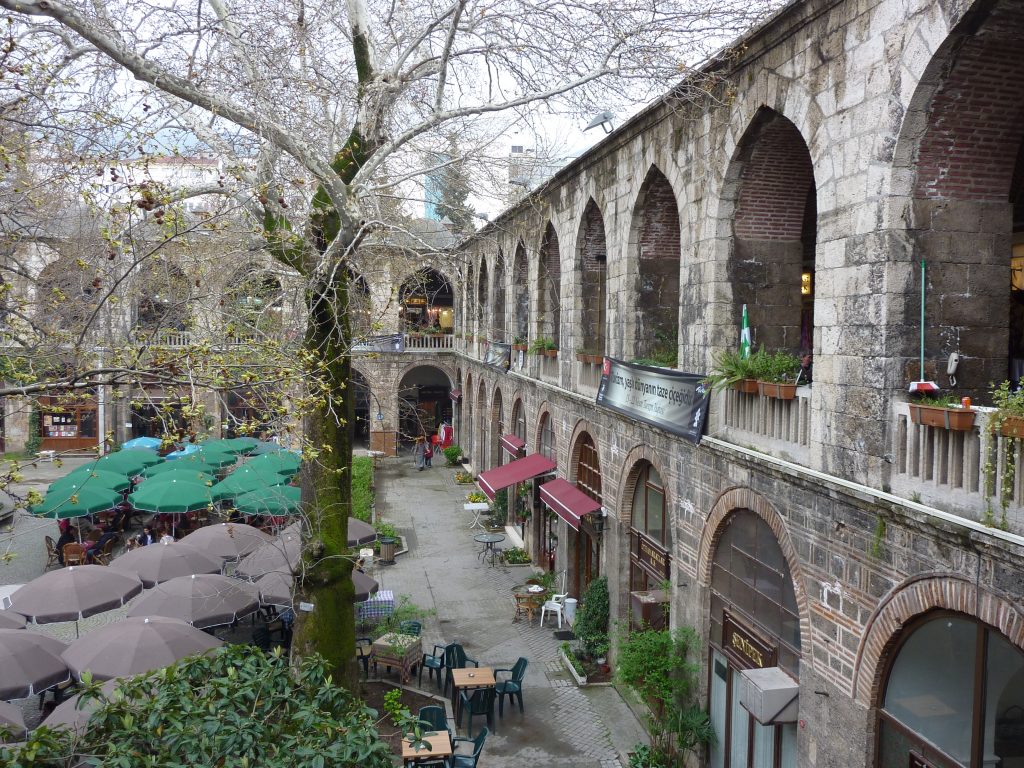
The main building surrounds a spacious, almost rectangular courtyard.
Constructed primarily from stone and brick, it features two levels of rooms opening onto covered arcaded galleries.
Historically, these rooms accommodated merchants and supported the storage, display and sale of goods.
Today, many have been adapted into shops, allowing the building to remain an active commercial destination.
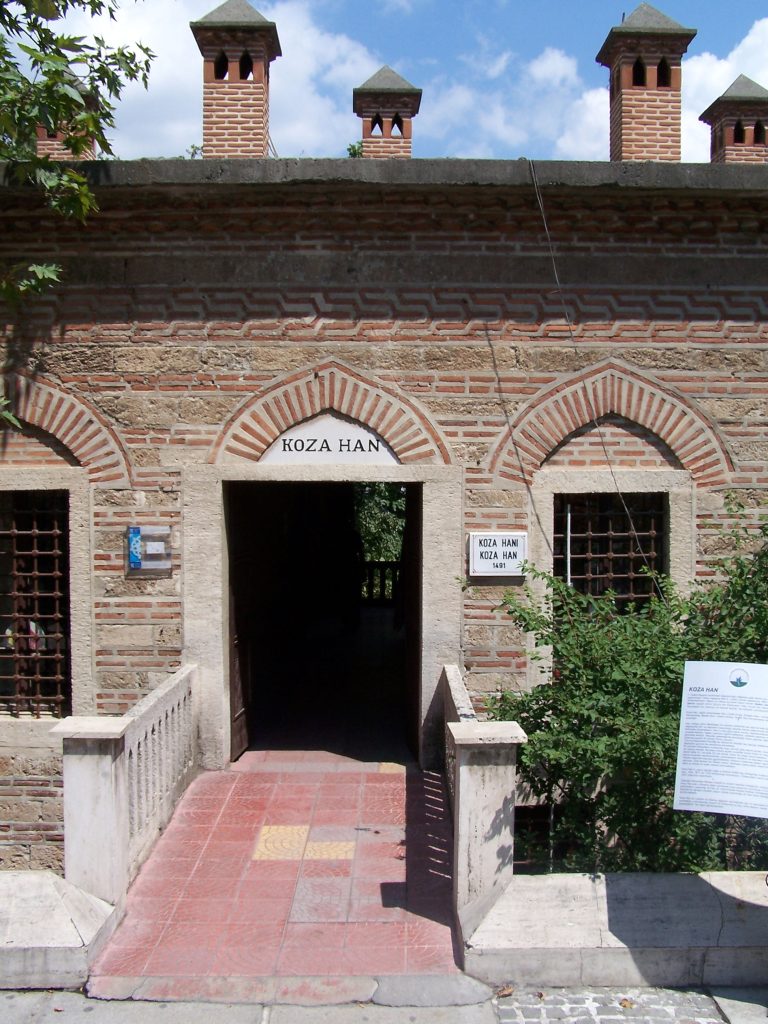
The Historic Entrance
The monumental northern entrance is one of Koza Han’s most striking architectural features.
Its carefully worked stone decoration reflects the importance of the building within Bursa’s historic market district.
Passing through the entrance leads visitors away from the surrounding shopping streets into a courtyard filled with history and everyday activity.
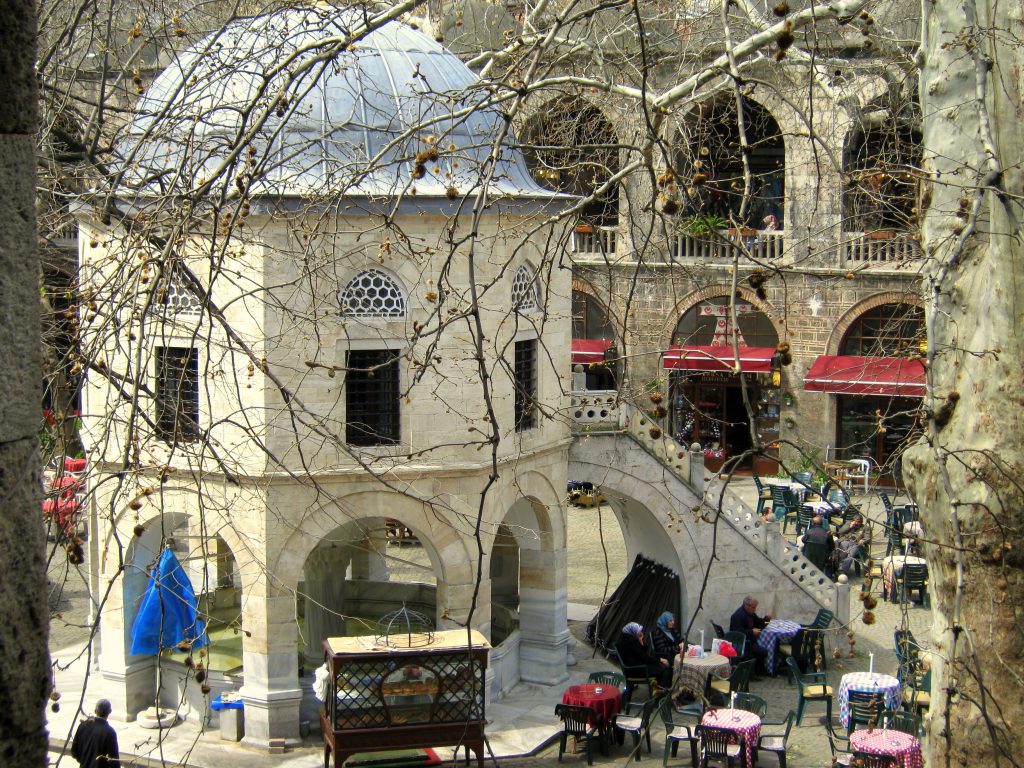
The Octagonal Courtyard Mosque
At the centre of Koza Han stands a small, elevated octagonal mosque (mescit).
Its unusual design places the prayer space above a fountain structure supported by arches and columns.
The mosque is one of the complex’s most recognisable features and creates an elegant focal point within the courtyard.
The Inner Koza Han
The original complex also included a secondary section to the east, traditionally associated with storage facilities, stables and other practical requirements of caravan trade.
Together, these areas demonstrate how Ottoman commercial buildings were designed to serve merchants and their goods.
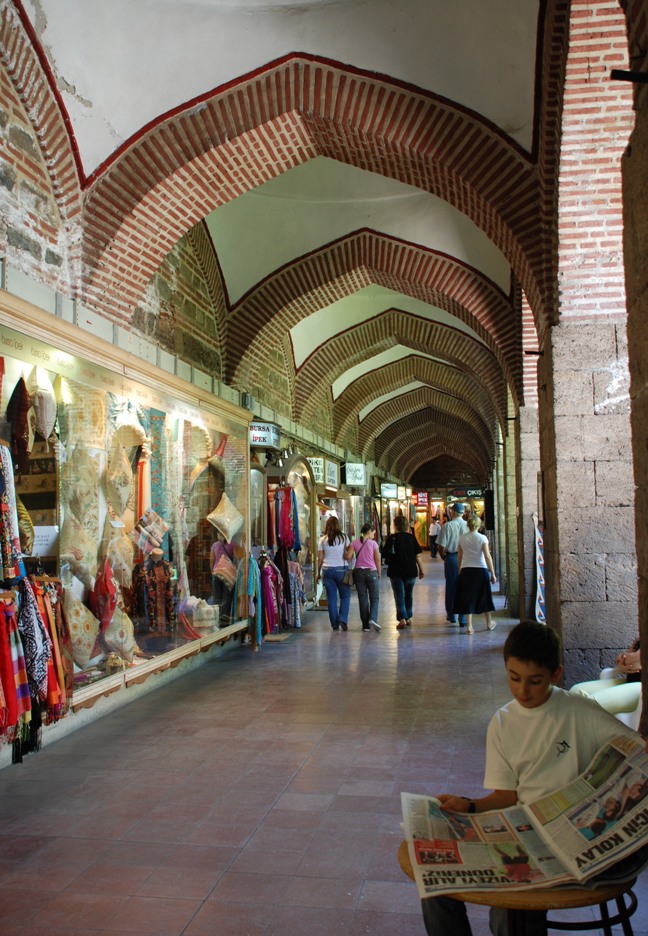
Koza Han Today: A Living Silk Bazaar
Koza Han remains an active shopping destination rather than a museum.
Its historic rooms contain businesses selling silk scarves, shawls, fabrics, accessories and other textile products.
Visitors can browse colourful displays while experiencing the atmosphere of a centuries-old trading complex.
The central courtyard has become particularly popular for cafés and tea gardens.
Sitting beneath the trees with a glass of Turkish tea is one of the most enjoyable ways to appreciate Koza Han’s architecture and lively surroundings.
Things to See and Do at Koza Han
Shop for Traditional Bursa Silk
Explore the shops displaying silk scarves, shawls and textiles in a variety of colours and patterns.
Ask sellers about materials and production methods, particularly when looking for genuine silk.
Enjoy Turkish Tea in the Courtyard
Take a break in the historic courtyard and enjoy the atmosphere of one of Bursa’s most beloved meeting places.
Admire the Octagonal Mosque
Observe the distinctive elevated mosque and the fountain beneath it, an architectural highlight of the complex.
Explore the Upper Galleries
Walk along the upper-level arcades to appreciate the building’s proportions, vaulted spaces and views across the courtyard.
Photograph the Historic Architecture
Koza Han offers beautiful photographic opportunities, especially around its stone arches, entrances, galleries and central courtyard.
Discover Bursa’s Traditional Market District
Continue your walk through the surrounding bazaars and historic streets, where commercial traditions remain an important part of everyday life.
Nearby Attractions
Koza Han is ideally located for exploring Bursa’s most important historical and cultural landmarks.
Bursa Grand Mosque (Ulu Cami): A monumental Ottoman mosque famous for its twenty domes, impressive interior and extraordinary calligraphy.
Orhan Gazi Mosque: An important early Ottoman monument associated with the ruler who conquered Bursa.
Bursa Covered Bazaar (Kapalı Çarşı): A historic shopping area filled with traditional businesses and local products.
Emir Han: One of Bursa’s early Ottoman caravanserais, closely connected to the city’s commercial development.
Bursa City Museum: A fascinating museum presenting Bursa’s history, traditional crafts and cultural heritage.
Irgandı Bridge: A remarkable historic bridge lined with shops and associated with traditional craftsmanship.
Green Mosque (Yeşil Cami): A masterpiece of early Ottoman architecture, admired for its elegant design and decorative details.
Green Tomb (Yeşil Türbe): The magnificent mausoleum of Sultan Mehmed I, celebrated for its distinctive turquoise tiles.
Tombs of Osman and Orhan Gazi: The resting places of the first two Ottoman rulers, located in the historic Tophane district.
How to Get to Koza Han
Koza Han is located in the historic centre of Bursa, within the Osmangazi district.
Address: Osmangazi Mahallesi, Uzun Çarşı Caddesi, 16010 Osmangazi, Bursa, Türkiye.
On Foot
Koza Han is easily reached on foot from Bursa Grand Mosque, Orhan Gazi Mosque and the surrounding historic market streets.
Walking is one of the best ways to discover the area’s connected bazaars, caravanserais and Ottoman monuments.
By Public Transport
Visitors can use Bursa’s public transport network to reach the city centre and continue on foot.
By Taxi or Car
Taxis can bring visitors close to the historic market district. However, some surrounding streets are pedestrianised or have restricted vehicle access.
Drivers should use an appropriate nearby parking facility and explore the historic centre on foot.
Best Time to Visit Koza Han
Koza Han can be visited throughout the year.
Spring: Pleasant weather makes the courtyard cafés especially enjoyable.
Summer: The shaded courtyard offers a welcome place to relax while exploring central Bursa.
Autumn: Mild temperatures are ideal for combining shopping with visits to nearby historic attractions.
Winter: The historic galleries and shops remain appealing, although courtyard seating depends on weather conditions.
Weekday mornings may provide a quieter experience than busy weekends.
Shopping hours can vary by business and on public holidays, so visitors should confirm current opening arrangements before travelling.
Travel Tips and Things to Know Before Visiting
- Allow approximately 45–90 minutes to explore the courtyard, galleries and shops.
- Visit earlier in the day if you prefer a quieter atmosphere.
- Compare products and prices before purchasing silk items.
- Ask whether a scarf or fabric is pure silk, blended silk or synthetic material.
- Take time to explore both levels of the caravanserai.
- Respect worshippers and avoid disturbing the courtyard mosque.
- Ask permission before photographing shop interiors or merchandise displays.
- Wear comfortable shoes for walking through Bursa’s historic market district.
- Combine Koza Han with Bursa Grand Mosque and the surrounding bazaars for an enjoyable walking itinerary.
- Check current shop and café opening hours, particularly during religious and national holidays.
Frequently Asked Questions
What is Koza Han famous for?
Koza Han is famous for its Ottoman caravanserai architecture, historic silk trade, traditional textile shops and beautiful central courtyard.
When was Koza Han built?
Koza Han was completed and opened in 1491 during the reign of Sultan Bayezid II.
What does Koza Han mean?
“Koza” means cocoon in Turkish, referring to the silkworm cocoons historically traded at the caravanserai. “Han” means inn or caravanserai.
Can you buy real silk at Koza Han?
Shops sell silk products and other textiles. Visitors should ask sellers about fabric composition and product authenticity before purchasing.
Is Koza Han still used for shopping?
Yes. Koza Han remains an active commercial complex with shops and courtyard cafés.
Is Koza Han part of a UNESCO World Heritage Site?
Yes. Koza Han is located within Bursa’s UNESCO-listed historic Khans Area, part of the World Heritage property “Bursa and Cumalıkızık: The Birth of the Ottoman Empire.”
How long should I spend at Koza Han?
Most visitors can enjoy the complex in 45–90 minutes, although shopping and a leisurely tea break may take longer.
Is Koza Han close to Bursa Grand Mosque?
Yes. Koza Han is within a short walking distance of Bursa Grand Mosque and Orhan Gazi Mosque.
Did You Know?
A Name Inspired by Silk Cocoons: Koza Han takes its name from the silkworm cocoons once bought and sold here.
More Than 500 Years of Trade: The caravanserai has remained associated with commerce since its opening in 1491.
A Connection to Istanbul: Sultan Bayezid II commissioned Koza Han to help finance his religious and charitable complex in Istanbul.
International Merchants: Historical records connect the building with traders from across major commercial networks, including a representative of the Medici family of Florence.
A Mosque Above a Fountain: The elevated octagonal mosque in the courtyard is one of the building’s most distinctive architectural features.
UNESCO Recognition: Koza Han belongs to Bursa’s historic Khans Area, included in the UNESCO World Heritage inscription of 2014.
Why Should You Visit Koza Han?
Koza Han is one of the best places in Bursa to experience Ottoman history as part of everyday life.
Unlike a monument preserved solely for sightseeing, this remarkable caravanserai continues to function as a marketplace, connecting modern visitors with centuries of silk trading traditions.
Its historic stone galleries, colourful textile shops, distinctive courtyard mosque and welcoming cafés create an atmosphere that is both culturally rich and genuinely enjoyable.
Whether you are interested in architecture, shopping, photography or simply drinking Turkish tea in a beautiful historic setting, Koza Han is an essential stop on any visit to Bursa.
Browse The Map
Reviews And Comments
Suggested Listings
Eski Aynali Carsi Bursa

Emir Sultan Mosque in Bursa

Bursa Covered Bazaar (Kapalı Çarşı)

Not rated yet.
Why don't you register your impressions?