


Contact
- Osmangazi Mahallesi, Yiğitler Caddesi No:4, Tophane Park, 16040 Osmangazi, Bursa, Türkiye
- info@allabouturkiye.com
Where the Story of the Ottoman Empire Began
| MMonday | 09:00 AM - 18:00 |
| TTuesday | 09:00 AM - 18:00 |
| WWednesday | 09:00 AM - 18:00 |
| TThursday | 09:00 AM - 18:00 |
| FFriday | 09:00 AM - 18:00 |
| SSaturday | 09:00 AM - 18:00 |
| SSunday | 09:00 AM - 18:00 |
Tombs of Osman and Orhan Gazi: The Birthplace of Ottoman History in Bursa
Perched on a historic hill overlooking Bursa, the Tombs of Osman and Orhan Gazi are among the city’s most significant cultural and spiritual landmarks. Located within Tophane Park, these mausoleums honour the founder of the Ottoman dynasty and his son, the ruler who conquered Bursa and transformed it into an early Ottoman capital.
Surrounded by historic walls, gardens and panoramic views, the tombs offer visitors a meaningful introduction to the origins of one of history’s most influential empires.
Beyond their importance as royal burial sites, the mausoleums reveal fascinating layers of Byzantine and Ottoman history, architectural change and centuries of remembrance.
The History of the Tombs of Osman and Orhan Gazi
The story of these royal tombs is closely connected to the conquest of Bursa in 1326.
Osman Gazi, traditionally recognised as the founder of the Ottoman dynasty, established the foundations of the state that would eventually become the Ottoman Empire.
His son Orhan Gazi continued the dynasty’s expansion and captured Bursa, making the city a major political and administrative centre.
The Silver Dome: A Founder’s Final Wish
According to historical tradition, Osman Gazi saw a shining, lead-covered dome on the hillside during the siege of Bursa.
The building, associated with the Byzantine Monastery of Saint Elias, became known as Gümüşlü Kümbet, meaning the Silver Dome.
Osman is said to have expressed a wish to be buried beneath this dome.
Following the conquest of Bursa in 1326, Orhan Gazi fulfilled his father’s wish by arranging his burial at the site.
Destruction and Reconstruction
The original burial structures experienced major damage over the centuries.
A fire in 1801 and the devastating Bursa earthquake of 1855 caused significant destruction.
In 1863, Sultan Abdülaziz ordered the mausoleums to be rebuilt, giving them much of their present architectural appearance.
Although the buildings seen today largely date from the 19th century, their historical significance reaches back to the earliest Ottoman period.
Tomb of Osman Gazi
The mausoleum of Osman Gazi stands within Tophane Park and is one of Bursa’s most revered historical monuments.
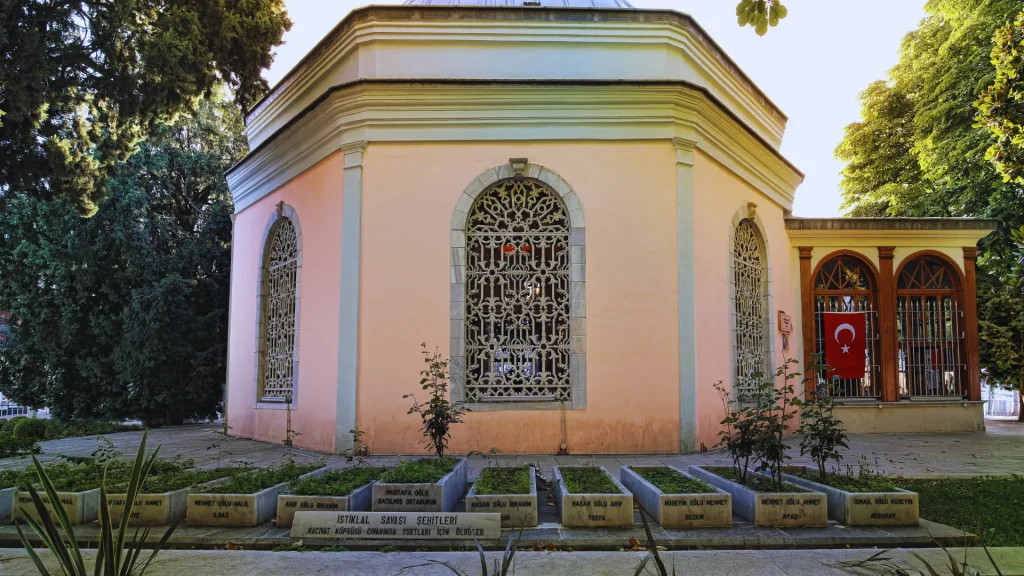
Architecture of Osman Gazi’s Tomb
The building has an octagonal plan and is covered by a dome.
Its stone construction, carefully proportioned interior and decorative details reflect the restoration undertaken during the reign of Sultan Abdülaziz.
The dome and interior surfaces feature ornamental painting associated with 19th-century Ottoman design.
The Sarcophagus of Osman Gazi
At the centre of the mausoleum stands the symbolic sarcophagus of Osman Gazi.
It is distinguished by decorative mother-of-pearl inlay and surrounding railings.
The interior also contains sarcophagi associated with other members of the early Ottoman dynasty, including Alaaddin Bey, Asporça Hatun, İbrahim Bey and Savcı Bey.
Together, these memorials emphasise the site’s importance as a dynastic burial place.

Tomb of Orhan Gazi
Situated close to his father’s mausoleum, the Tomb of Orhan Gazi commemorates the ruler who captured Bursa in 1326.
Orhan Gazi played a crucial role in transforming the early Ottoman principality into a more organised and expanding state.
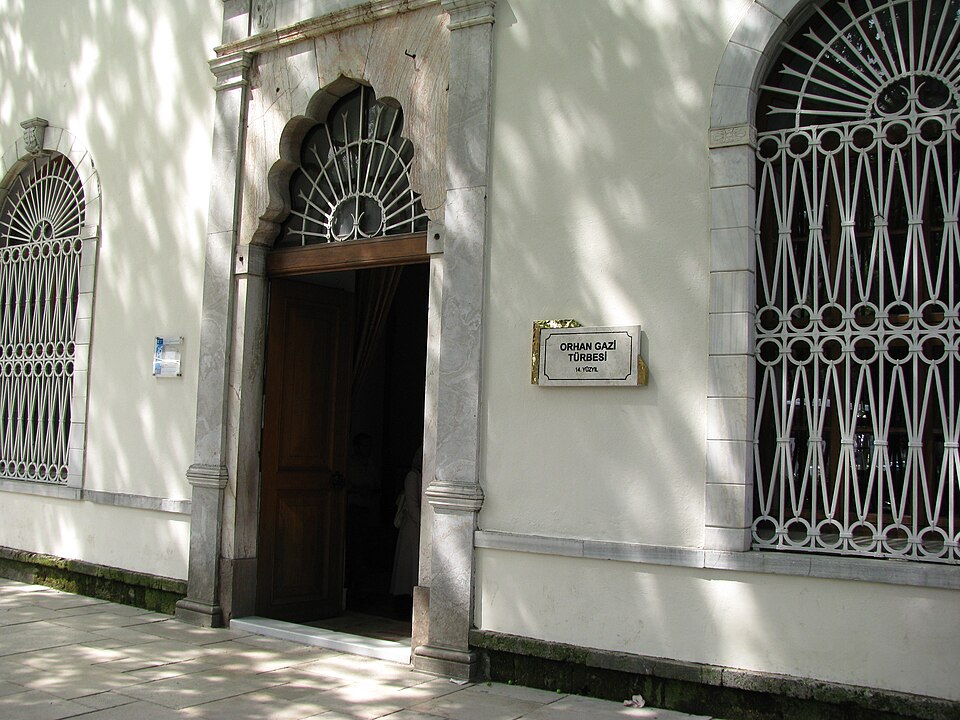
Architecture of Orhan Gazi’s Tomb
Unlike the octagonal tomb of Osman Gazi, Orhan Gazi’s mausoleum has a square plan.
A central dome is supported by four columns, creating a distinctive interior arrangement.
The building includes decorative painted details influenced by the 19th-century Ottoman Baroque style.
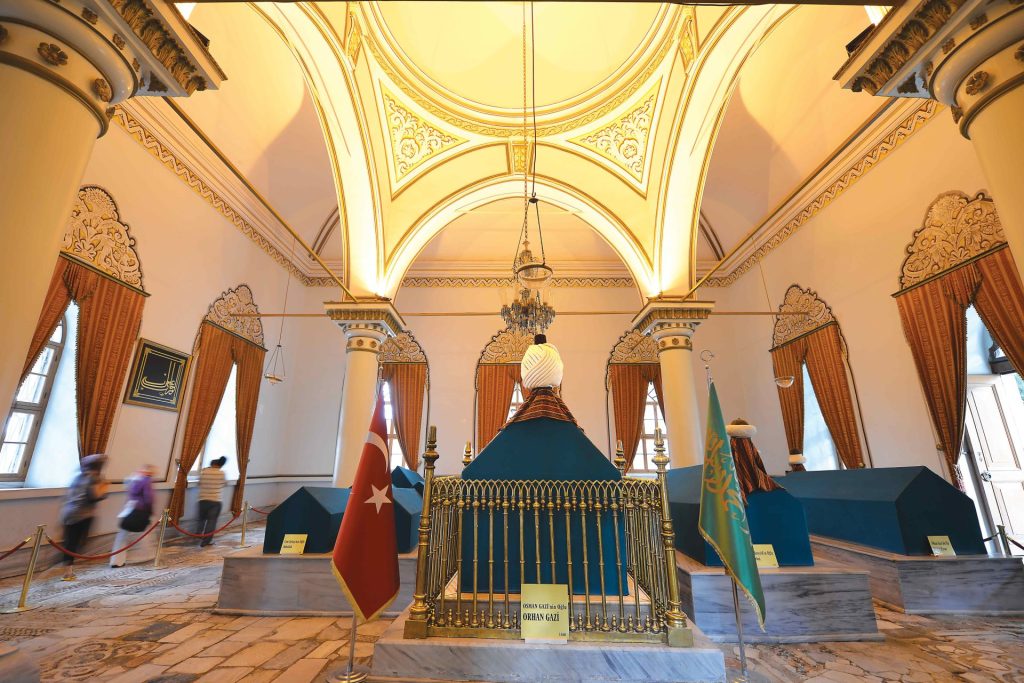
The Byzantine Mosaics
One of the mausoleum’s most fascinating features is the survival of Byzantine floor mosaics associated with the former Saint Elias Monastery.
These traces reveal the site’s history before the Ottoman conquest and illustrate how different cultural periods have shaped Bursa.
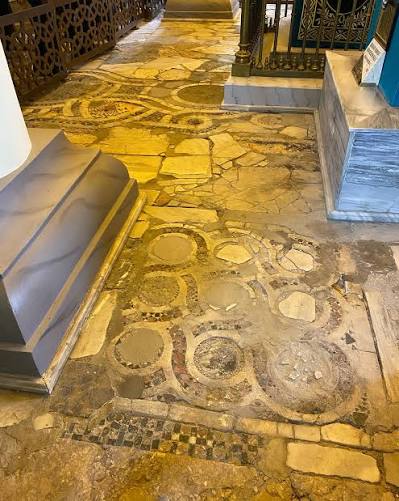
The Royal Burial Chamber
Orhan Gazi’s symbolic sarcophagus occupies the central position beneath the dome.
Other sarcophagi commemorate members of the Ottoman dynasty, including Nilüfer Hatun, Şehzade Kasım and several later royal descendants.
The interior offers a quiet setting for reflecting on the dynasty’s early history.
What Makes the Tombs Special?
The tombs are more than memorials to two Ottoman rulers.
They connect the city’s Byzantine past with its transformation into an Ottoman capital.
Their architectural differences also provide an opportunity to compare two distinct mausoleum designs: Osman Gazi’s octagonal structure and Orhan Gazi’s square-plan building.
The surrounding Tophane district adds another dimension to the visit, with historic fortifications and scenic views across modern Bursa.
The tombs are located within the UNESCO World Heritage property Bursa and Cumalıkızık: The Birth of the Ottoman Empire, inscribed in 2014.
Things to See and Do at the Tombs
Visit the Tomb of Osman Gazi
Discover the memorial of the Ottoman dynasty’s founder and admire the mausoleum’s distinctive octagonal architecture.
Explore the Tomb of Orhan Gazi
Observe the square-plan interior, decorative features and surviving traces of Byzantine mosaics.
Discover the Historic Tophane District
Walk through the surrounding historic area, where the city’s early Ottoman heritage remains closely connected to the landscape.
Admire the Views of Bursa
Enjoy the elevated viewpoints around Tophane Park, which offer an impressive perspective over the city.
Explore Bursa’s Historic Fortifications
Look for surviving sections of Bursa’s ancient defensive walls, reminders of the city’s long history before and after the Ottoman conquest.
Nearby Attractions
Several of Bursa’s most important historical landmarks can be explored alongside the Tombs of Osman and Orhan Gazi.
Tophane Clock Tower: A prominent landmark in the Tophane district, known for its distinctive architecture and elevated setting.
Bursa City Museum: Housed in a restored former courthouse, this museum introduces visitors to Bursa’s history, Ottoman heritage, traditional crafts and everyday life.
Bursa Grand Mosque (Ulu Cami): One of the city’s most magnificent Ottoman monuments, admired for its monumental interior and exceptional Islamic calligraphy.
Koza Han: A historic caravanserai associated with Bursa’s famous silk trade, featuring traditional shops and a beautiful courtyard.
Orhan Gazi Mosque: An important early Ottoman mosque closely associated with the ruler who conquered Bursa.
Irgandı Bridge: A remarkable 15th-century Ottoman bazaar bridge where historic architecture and traditional craftsmanship meet.
Green Mosque (Yeşil Cami): An outstanding example of early Ottoman architecture, celebrated for its decorative details and elegant design.
How to Get to the Tombs of Osman and Orhan Gazi
The tombs are located in Tophane Park, in Bursa’s historic Osmangazi district.
Address: Osmangazi Mahallesi, Yiğitler Caddesi No:4, Tophane Park, 16040 Osmangazi, Bursa, Türkiye.
Visitors can reach the area by taxi, local public transport or on foot from the historic city centre.
The Tophane district stands on elevated ground, so some walking routes involve uphill streets and steps.
Travellers exploring central Bursa can combine the tombs with nearby landmarks such as Bursa City Museum, Koza Han and Bursa Grand Mosque.
Best Time to Visit
The tombs can be appreciated throughout the year.
Spring and autumn are particularly pleasant for exploring the surrounding Tophane district on foot.
Morning visits may offer a quieter atmosphere, while late afternoon can be rewarding for enjoying the views across Bursa.
As these are important cultural and spiritual sites, visitors should be respectful of religious observances and other visitors.
Allow approximately 30–45 minutes for the two mausoleums, with additional time for Tophane Park and nearby attractions.
Travel Tips and Things to Know Before Visiting
- Dress respectfully when entering the mausoleums.
- Keep conversations quiet inside the tombs.
- Follow any instructions concerning photography and visitor access.
- Avoid touching sarcophagi, decorative features or historic surfaces.
- Wear comfortable walking shoes for the sloping streets around Tophane.
- Allow extra time to explore the nearby clock tower and historic walls.
- Check current opening arrangements before visiting, especially during public holidays.
- Combine the tombs with other historic Bursa landmarks for a rewarding walking itinerary.
Frequently Asked Questions
Where are the Tombs of Osman and Orhan Gazi located?
The tombs are located in Tophane Park in the Osmangazi district of Bursa, Türkiye.
Who was Osman Gazi?
Osman Gazi was the founder of the Ottoman dynasty, from which the Ottoman Empire developed.
Who was Orhan Gazi?
Orhan Gazi was Osman Gazi’s son and successor. He conquered Bursa in 1326 and helped establish the foundations of Ottoman administration.
When were the present mausoleums built?
The current buildings were reconstructed in 1863 under Sultan Abdülaziz following major damage caused by the 1855 earthquake.
What is the difference between the two tombs?
Osman Gazi’s mausoleum has an octagonal plan, while Orhan Gazi’s mausoleum has a square plan with a central dome supported by columns.
Are there Byzantine remains at the site?
Yes. Traces of Byzantine floor mosaics associated with the former Saint Elias Monastery can still be seen in Orhan Gazi’s mausoleum.
Are the tombs part of a UNESCO World Heritage Site?
Yes. They are located within the UNESCO-listed historic areas of Bursa, recognised in 2014.
How long should visitors spend at the tombs?
Approximately 30–45 minutes is generally sufficient for the two mausoleums, although visitors may wish to spend longer exploring Tophane Park.
Did You Know?
The Silver Dome Legend: According to tradition, Osman Gazi requested burial beneath a shining dome that he could see during the siege of Bursa.
A Byzantine Connection: The burial site is associated with the former Saint Elias Monastery, revealing a fascinating connection between Byzantine and Ottoman history.
Two Different Architectural Designs: Osman Gazi’s tomb is octagonal, while Orhan Gazi’s tomb has a square plan.
Rebuilt by an Ottoman Sultan: Both mausoleums were reconstructed in 1863 during the reign of Sultan Abdülaziz.
A UNESCO Heritage Site: The tombs form part of the historic areas included in Bursa’s UNESCO World Heritage designation.
Why Should You Visit the Tombs of Osman and Orhan Gazi?
Few places in Bursa offer such a direct connection to the origins of the Ottoman Empire.
The Tombs of Osman and Orhan Gazi bring together dynastic history, distinctive architecture, Byzantine heritage and the peaceful atmosphere of historic Tophane.
Visitors can discover the stories of the empire’s first two rulers, admire the beautifully reconstructed mausoleums and enjoy sweeping views across the city that became an early Ottoman capital.
For travellers interested in history, architecture and Türkiye’s cultural heritage, the Tombs of Osman and Orhan Gazi are an essential stop on any Bursa itinerary.
Browse The Map
Reviews And Comments
Suggested Listings
Cumalikizik Village, Bursa

Uludag National Park Bursa

Mount Uludag: Discover Bursa’s Stunning Mountain Escape

Not rated yet.
Why don't you register your impressions?