


Contact
- Ayvansaray, 34087 Fatih/İstanbul
- info@allabouturkiye.com
| MMonday | Closed |
| TTuesday | 09:00 AM - 17:00 |
| WWednesday | 09:00 AM - 17:00 |
| TThursday | 09:00 AM - 17:00 |
| FFriday | 09:00 AM - 17:00 |
| SSaturday | 09:00 AM - 17:00 |
| SSunday | 09:00 AM - 17:00 |
Tekfur Palace (Porphyrogenitus Palace) – A Rare Byzantine Palace
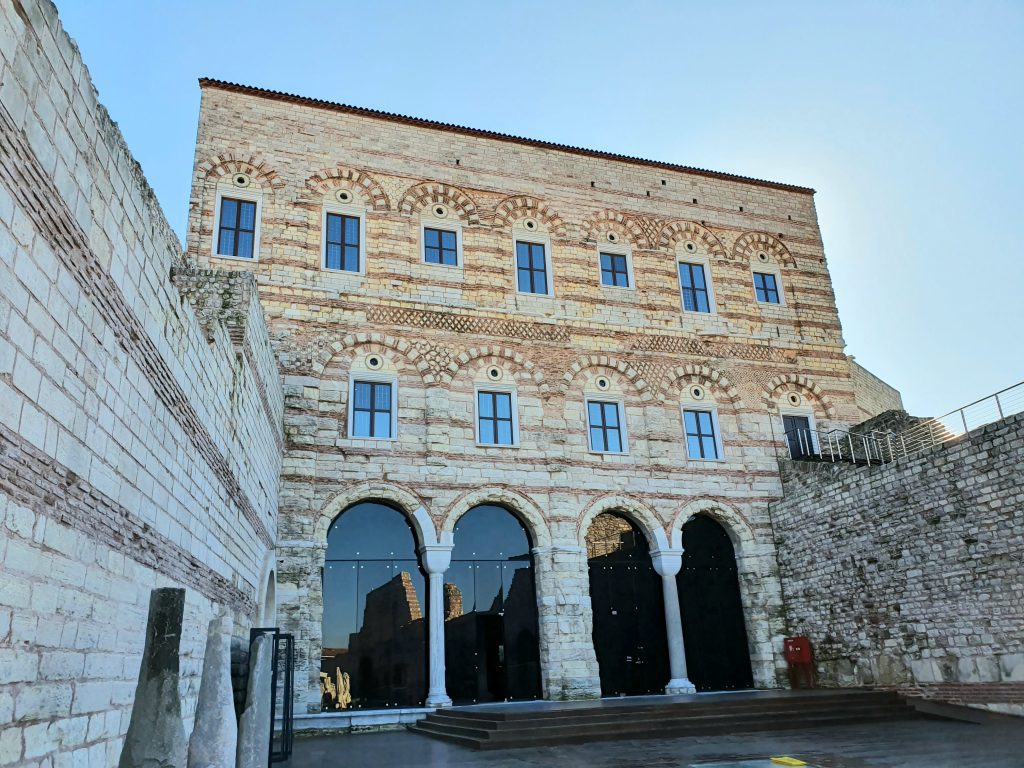
Tekfur Palace, also known as the Palace of the Porphyrogenitus, is one of the few surviving Byzantine imperial palaces in Istanbul. Located near the Edirnekapi section of the historic city walls, the structure once formed part of the famous Blachernae Palace complex, the residence of Byzantine emperors during the final centuries of the empire.
Today the restored building functions as the Tekfur Palace Museum, offering visitors a rare opportunity to explore one of the last remaining examples of Byzantine palace architecture in the city.
History of Tekfur Palace
Tekfur Palace is believed to have been constructed during the late Byzantine period in the 13th century.
It formed part of the larger Blachernae Palace, which served as the main imperial residence during the later centuries of the Byzantine Empire.
Unlike the earlier Great Palace near Hagia Sophia, the Blachernae complex was located closer to the land walls of Constantinople, providing better protection during times of conflict.
The name “Tekfur” comes from a Turkish term used during the Ottoman period to describe Byzantine rulers or noblemen.
After the Ottoman conquest of Constantinople in 1453, the palace gradually fell into disuse and underwent several different functions over the centuries.
Architecture of Tekfur Palace
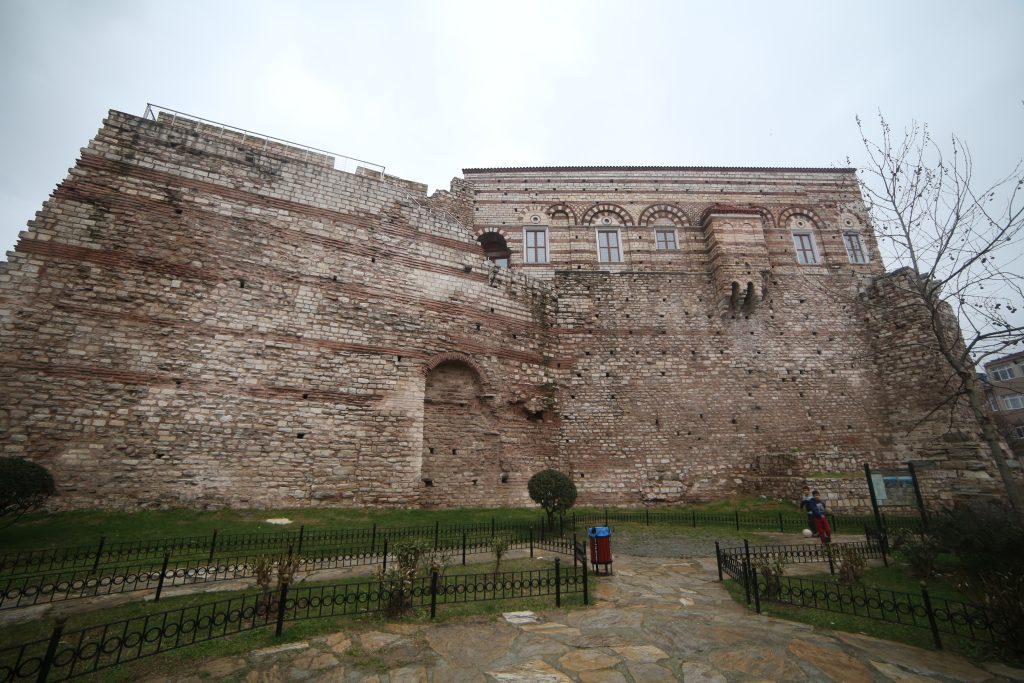
Tekfur Palace has a rectangular plan oriented east–west, with its western façade connected directly to the Theodosian city walls.
The palace originally consisted of multiple floors, although only parts of the main structure survive today.
One of the most striking architectural features of the building is its decorative façade made from alternating layers of red brick and white stone, a typical characteristic of late Byzantine architecture.
The large arched windows also add a distinctive visual rhythm to the exterior walls.
These architectural details demonstrate the advanced construction techniques used during the final centuries of the Byzantine Empire.
Restoration and Museum Transformation
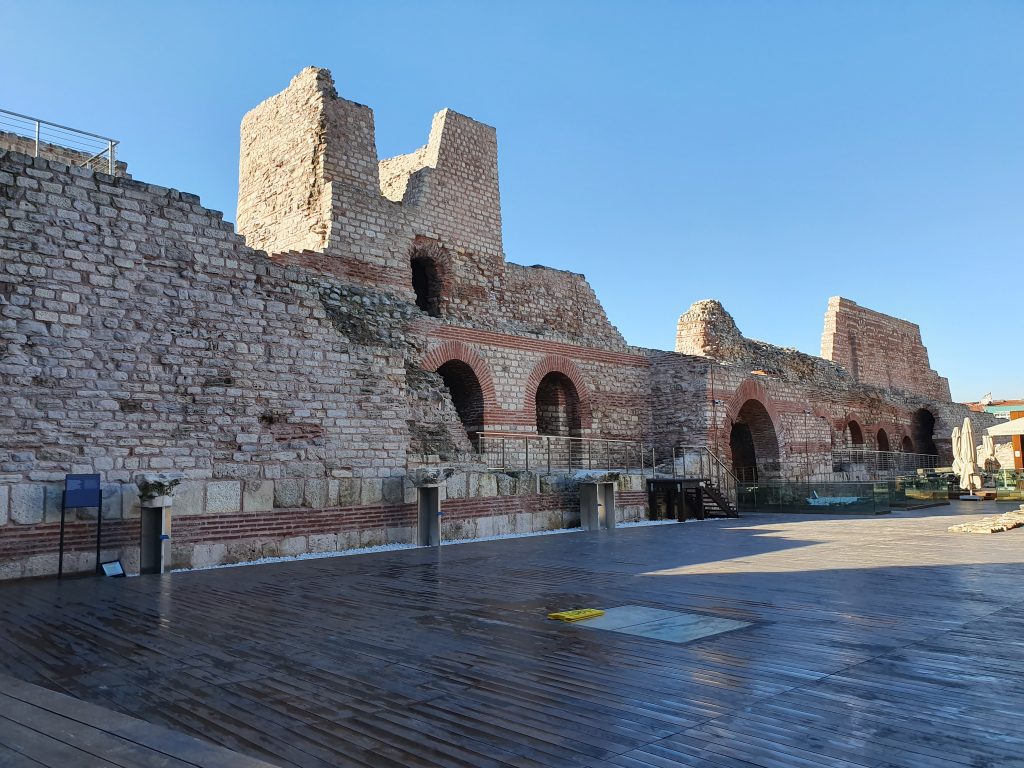
After centuries of neglect and structural damage, Tekfur Palace underwent an extensive restoration project.
The restoration carefully preserved the remaining architectural elements, including the original brickwork, stone decorations, and wooden structural components.
Today the palace functions as a museum, allowing visitors to explore the interior spaces and learn about the history of the Byzantine imperial residence.
Walking through the restored halls gives visitors a rare insight into the world of Byzantine royalty.
The Blachernae Palace Complex
Tekfur Palace is the only surviving structure from the once vast Blachernae Palace complex.
During the late Byzantine period, this palace replaced the Great Palace of Constantinople as the primary residence of the emperors.
The complex once included:
imperial residences
chapels
administrative buildings
ceremonial halls
Although most of these structures have disappeared, Tekfur Palace remains an important reminder of the final era of Byzantine rule in Constantinople.
Quick Facts About Tekfur Palace
Location: Edirnekapi, Fatih district
Built: 13th century
Empire: Byzantine Empire
Original Complex: Blachernae Palace
Architectural Style: Late Byzantine
Current Function: Tekfur Palace Museum
Special Feature: Decorative brick and stone façade
Best Time to Visit Tekfur Palace
Tekfur Palace can be visited throughout the year.
Morning visits are usually quieter and provide a better opportunity to explore the museum comfortably.
Spring and autumn offer pleasant weather for exploring the surrounding historic city walls of Istanbul.
How to Reach Tekfur Palace
Tekfur Palace is located near Edirnekapi along the historic Theodosian Walls.
By Bus
Several buses from Eminonu and Fatih stop near Edirnekapi.
By Metro
Visitors can take the M2 Metro Line to Halic Station and continue by bus.
Walking
The palace can also be reached on foot from nearby historic neighborhoods such as Balat and Chora Church.
Nearby Attractions
Several historical landmarks are located close to Tekfur Palace.
Chora Church (Kariye Mosque)
A famous Byzantine monument known for its mosaics and frescoes.
Fethiye Mosque (Pammakaristos Church)
Another Byzantine church converted into a mosque.
Theodosian Walls of Constantinople
The massive defensive walls that protected the Byzantine capital.
Balat Historic District
A colorful historic neighborhood along the Golden Horn.
FAQ
What is Tekfur Palace?
Tekfur Palace is a surviving part of the Byzantine Blachernae Palace complex from the 13th century.
Why is Tekfur Palace important?
It is one of the few remaining Byzantine palace structures in Istanbul.
What does “Tekfur” mean?
The word “Tekfur” was used in the Ottoman period to describe Byzantine rulers or noblemen.
Can visitors enter Tekfur Palace today?
Yes, the restored structure now functions as the Tekfur Palace Museum.
Things to Know Before Visiting Tekfur Palace
The palace is located near the historic city walls of Constantinople.
It is one of the few surviving Byzantine imperial palace buildings.
The museum highlights the architectural history of the late Byzantine period.
Visiting the palace can easily be combined with trips to Chora Church and Balat district.
Browse The Map
Reviews And Comments
Suggested Listings
Basilica Cistern (Yerebatan Sarnici)

Dolmabahçe Palace Museum

Turbes Museum Istanbul

Not rated yet.
Why don't you register your impressions?