


Contact
- Vişnezade, Dolmabahçe Cd., 34357 Beşiktaş/İstanbul
- +90 (0212) 236 90 00
- info@allabouturkiye.com
| MMonday | Closed |
| TTuesday | 09:00 AM - 16:00 |
| WWednesday | 09:00 AM - 16:00 |
| TThursday | 09:00 AM - 16:00 |
| FFriday | 09:00 AM - 16:00 |
| SSaturday | 09:00 AM - 16:00 |
| SSunday | 09:00 AM - 16:00 |
Dolmabahce Palace – Imperial Residence on the Bosphorus
Dolmabahce Palace is one of the most magnificent palaces in Istanbul and a symbol of the late Ottoman Empire. Located on the European shore of the Bosphorus in Beşiktaş, the palace served as the main administrative center of the Ottoman Empire during the 19th century.
With its grand architecture, luxurious interiors, and scenic waterfront location, Dolmabahce Palace remains one of the most visited historical monuments in Istanbul.
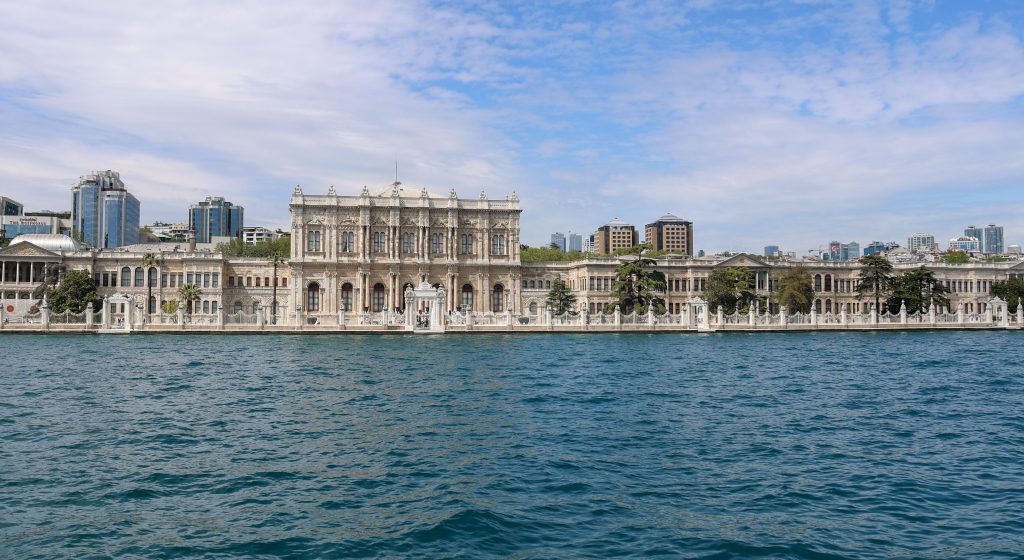
History of Dolmabahce Palace
Before the construction of the palace, the area where Dolmabahce Palace stands today was originally a small natural bay along the Bosphorus.
During the 17th century, the bay was filled in and several wooden pavilions and gardens were built for Ottoman sultans as places of recreation.
In the 19th century, Sultan Abdülmecid I decided to replace the old structures with a grand imperial palace that would reflect the modern image of the Ottoman Empire.
Construction of Dolmabahce Palace took place between 1843 and 1856 under the direction of Garabet Balyan and Nigoğayos Balyan, members of the famous Balyan family of Ottoman architects.
Architecture of the Palace
Dolmabahce Palace has a distinctive L-shaped layout.
The longer section of the palace runs parallel to the Bosphorus waterfront, while the shorter wing extends toward the land side.
The palace combines traditional Ottoman architectural elements with European styles including:
Neoclassical
Baroque
Empire style
This mixture of styles reflects the modernization period of the Ottoman Empire during the 19th century.
Interior and Decorations
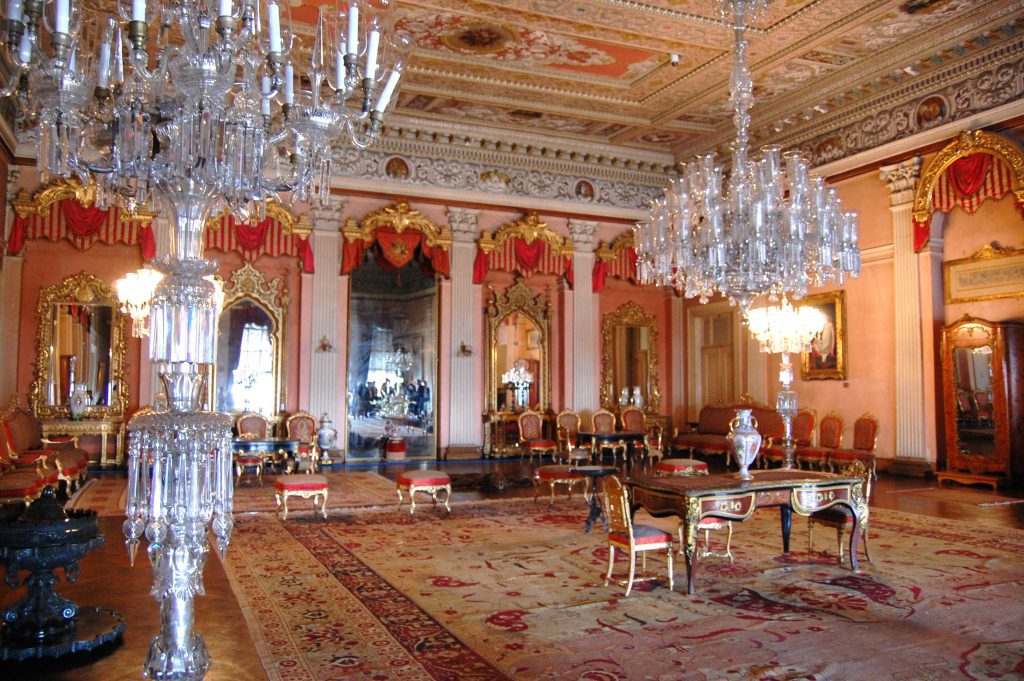
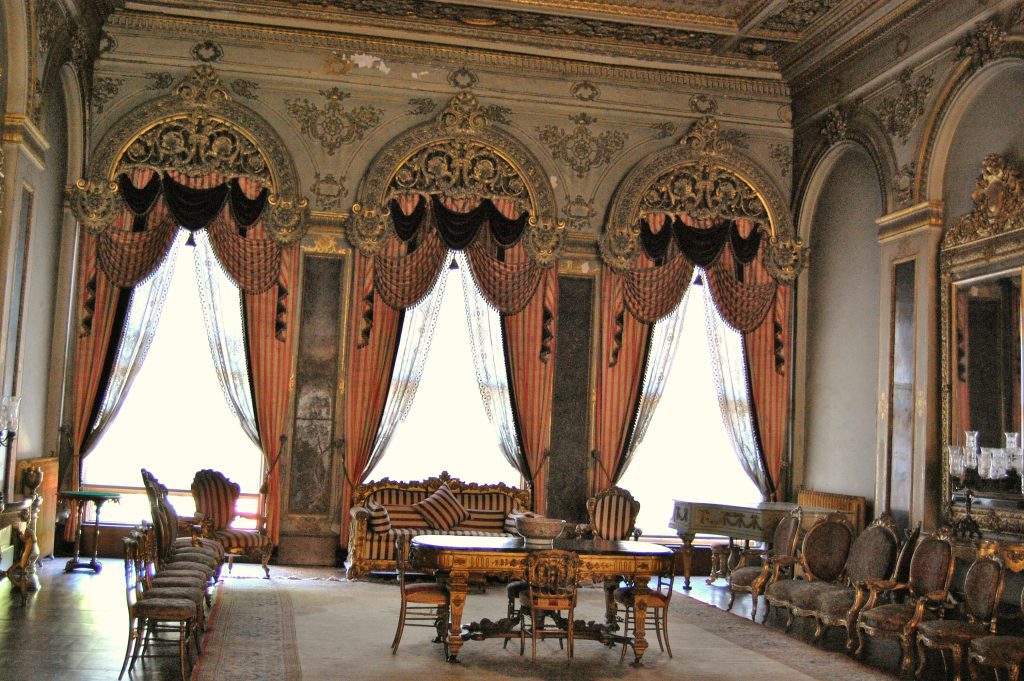
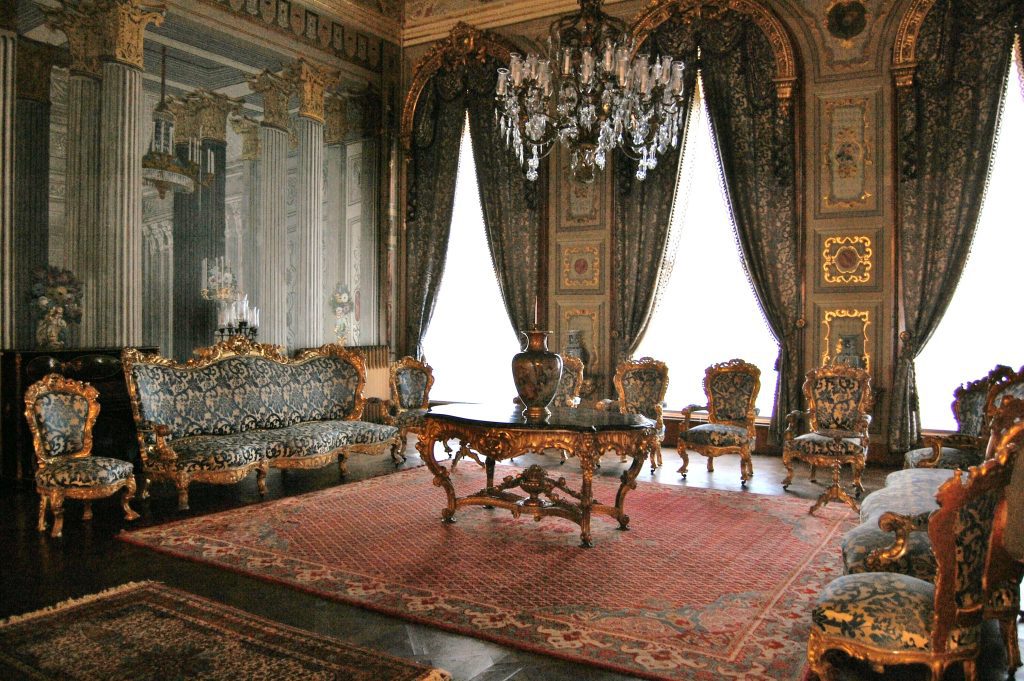
Dolmabahce Palace is famous for its lavish interior decoration.
Inside the palace visitors can see:
nearly 900 paintings by local and foreign artists
magnificent crystal chandeliers and candlesticks
porcelain collections from Europe, China, and Japan
The palace is also decorated with luxurious Hereke carpets, specially woven for the palace and covering approximately 4,454 square meters.
In total, the palace includes:
285 rooms
44 halls
68 toilets
6 baths
Selamlik and Harem Sections
The palace is divided into two main sections.
Selamlik (State Apartments)
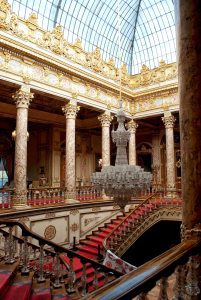
This section was used for official state affairs. Important ceremonies and receptions were held in the magnificent Ceremonial Hall (Muayede Hall).
Harem Section
The Harem was the private living area of the imperial family, where the sultan, his mother, wives, and children resided.
Atatürk and Dolmabahce Palace
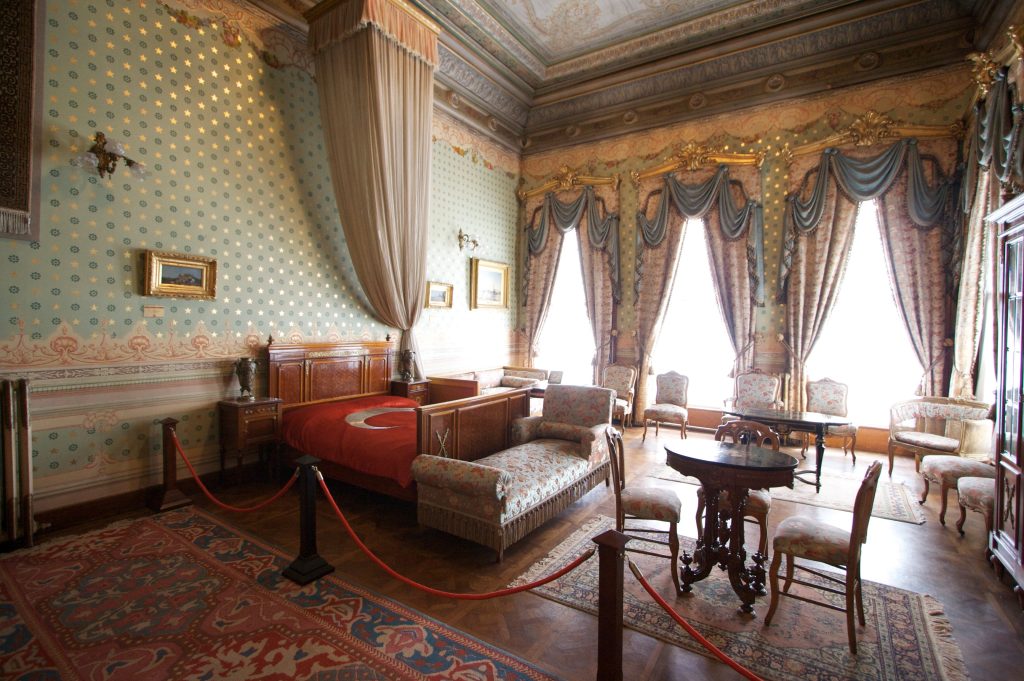
Dolmabahce Palace also holds an important place in the history of modern Turkey.
Mustafa Kemal Atatürk, the founder of the Republic of Turkey, spent the final days of his life in a room overlooking the Bosphorus in the palace.
He passed away here on November 10, 1938, making the palace an important national memorial.
Quick Facts About Dolmabahce Palace
Location: Beşiktaş, Istanbul
Built: 1843–1856
Architects: Garabet Balyan and Nigoğayos Balyan
Architecture: Ottoman with European influences
Rooms: 285 rooms and 44 halls
Special Feature: Ceremonial Hall and Bosphorus waterfront
Best Time to Visit
Dolmabahce Palace can be visited throughout most of the year.
Morning visits are recommended to avoid crowds and to fully explore the large palace complex.
Opening Hours
The palace is open every day except Monday and Thursday.
October 1 – February 28
09:00 – 15:00
March 1 – September 30
09:00 – 16:00
Visits are conducted with guided tours.
How to Reach Dolmabahce Palace
Dolmabahce Palace is located on the Bosphorus waterfront in Beşiktaş.
By Tram
Take the T1 tram line to Kabataş Station, then walk toward Beşiktaş.
By Bus
Many city buses stop at Beşiktaş Square, a short walk from the palace.
By Ferry
Visitors can also arrive by ferry to Beşiktaş Pier.
Nearby Attractions
Several important landmarks are located near the palace.
Dolmabahce Mosque
An elegant Ottoman Baroque mosque located beside the palace.
Besiktas Square
A lively waterfront district with cafés and shops.
Bosphorus Waterfront
A scenic promenade along the Bosphorus.
Naval Museum
A museum displaying Ottoman naval history.
FAQ
When was Dolmabahce Palace built?
Construction began in 1843 and was completed in 1856.
Who designed the palace?
The palace was designed by Garabet Balyan and Nigoğayos Balyan.
How many rooms are in Dolmabahce Palace?
The palace contains 285 rooms and 44 halls.
Why is Dolmabahce Palace important?
It served as the main administrative center of the late Ottoman Empire and was also the place where Mustafa Kemal Atatürk passed away in 1938.
Things to Know Before Visiting
Dolmabahce Palace is one of the largest and most luxurious palaces in Turkey.
The palace combines Ottoman and European architectural styles.
Visits are conducted with official guides.
The palace is located directly on the Bosphorus waterfront.
Browse The Map
Reviews And Comments
Suggested Listings
Turkish and Islamic Arts Museum Istanbul

Turbes Museum Istanbul

Basilica Cistern (Yerebatan Sarnici)

Not rated yet.
Why don't you register your impressions?