


| MMonday | Open 24 Hours |
| TTuesday | Open 24 Hours |
| WWednesday | Open 24 Hours |
| TThursday | Open 24 Hours |
| FFriday | Open 24 Hours |
| SSaturday | Open 24 Hours |
| SSunday | Closed |
Zeyrek Mosque (Pantocrator Monastery) – A Byzantine Heritage in Istanbul
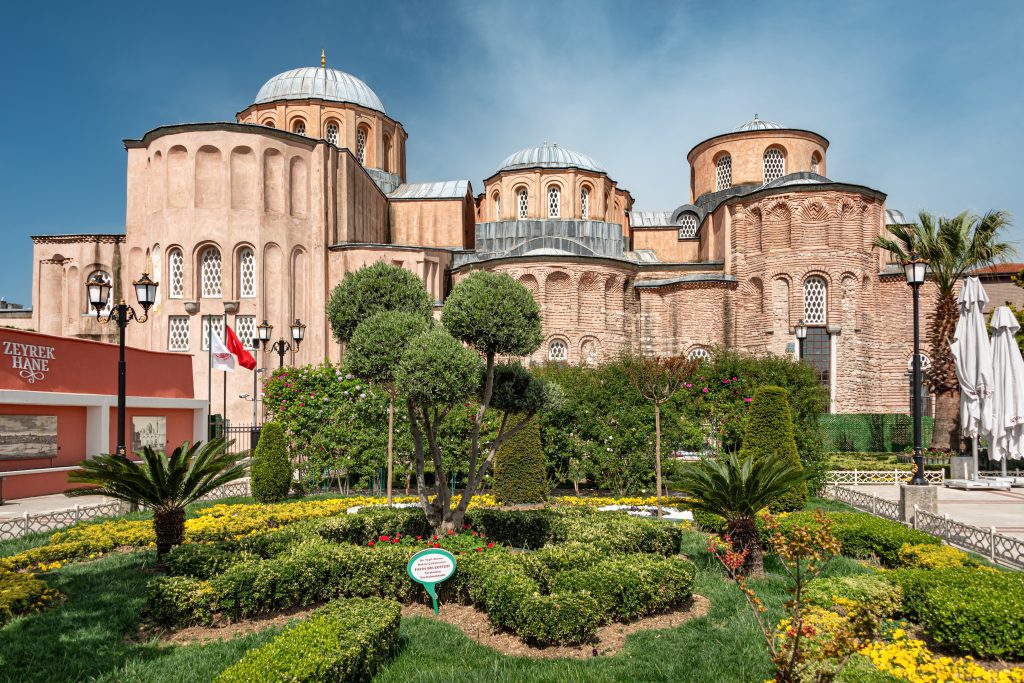
Zeyrek Mosque, formerly known as the Pantocrator Monastery, is one of the most important surviving Byzantine monuments in Istanbul. Located on a hill overlooking the historic district of Fatih, the complex stands near the Valens Aqueduct and offers a remarkable glimpse into the architectural and religious life of Byzantine Constantinople.
Originally built in the 12th century, the complex was one of the largest monastic institutions in the Byzantine Empire. Today, the northern church of the complex functions as a mosque while the entire structure remains an important historical monument within the Historic Areas of Istanbul UNESCO World Heritage Site.
History of the Pantocrator Monastery
The Pantocrator Monastery complex was constructed during the reign of Byzantine Emperor John II Komnenos (1118–1143).
The first church of the complex was commissioned by Empress Eirene, the wife of John II and daughter of the Hungarian King Ladislaus I. She built the southern church as part of a monastic complex dedicated to Christ Pantocrator.
After the death of Empress Eirene, Emperor John II ordered the construction of a second church to the north. Later, the emperor decided to connect the two buildings by adding a funerary chapel between them in 1136.
This chapel served as the imperial burial site where both the emperor and empress were interred.
During the Ottoman conquest of Constantinople in 1453, the complex was converted into a mosque and became known as Zeyrek Mosque, named after the surrounding neighborhood.
Architecture of Zeyrek Mosque
The Pantocrator Monastery complex consists of three interconnected churches built side by side.
Both the northern and southern churches follow a closed Greek cross plan, a common architectural style in middle Byzantine churches.
The central spaces are covered by domes supported by high drums, allowing natural light to illuminate the interior.
A narthex was added to the western side of the churches, forming the entrance area of the complex.
Although parts of the structure were modified during the Ottoman period, many original Byzantine architectural elements remain visible today.
The northern church currently functions as Zeyrek Mosque, while restoration work has helped preserve the historical structure.
Importance of the Complex
The Pantocrator Monastery was not only a religious center but also a major charitable and educational institution during the Byzantine era.
The monastery complex included facilities such as:
a hospital
a library
living quarters for monks
charitable services for the poor
Because of its scale and importance, it was considered one of the most influential monasteries in Constantinople.
Quick Facts About Zeyrek Mosque
Location: Fatih district, Istanbul
Built: 12th century
Commissioned by: Emperor John II Komnenos
Original Name: Pantocrator Monastery
Architecture: Middle Byzantine style
Complex: Three connected churches
Current Status: Active mosque and historical monument
UNESCO Status: Part of Historic Areas of Istanbul
Best Time to Visit Zeyrek Mosque
Zeyrek Mosque can be visited throughout the year.
Morning hours are usually quieter and allow visitors to explore the historic neighborhood more comfortably.
The surrounding hills also offer beautiful views over the Golden Horn, making the area particularly attractive for photographers.
How to Reach Zeyrek Mosque
Zeyrek Mosque is located in the Fatih district, near the historic Valens Aqueduct.
By Tram
Visitors can take the T1 Tram Line to Aksaray Station and walk toward the aqueduct.
By Metro
The nearest metro station is Vezneciler (M2 Line).
Walking
The mosque is also within walking distance of Valens Aqueduct and Suleymaniye Mosque.
Nearby Attractions
Several historical landmarks are located near Zeyrek Mosque.
Valens Aqueduct (Bozdogan Kemeri)
A monumental Roman aqueduct built in the 4th century.
Suleymaniye Mosque
One of the masterpieces of Mimar Sinan overlooking the Golden Horn.
Golden Horn viewpoints
The surrounding hills provide impressive panoramic views of Istanbul.
Grand Bazaar
One of the oldest covered markets in the world.
FAQ
What is Zeyrek Mosque?
Zeyrek Mosque is a former Byzantine monastery known as the Pantocrator Monastery, built in the 12th century.
Who built the Pantocrator Monastery?
The monastery was commissioned by Byzantine Emperor John II Komnenos and his wife Empress Eirene.
When was the monastery converted into a mosque?
The complex was converted into a mosque after the Ottoman conquest of Constantinople in 1453.
Why is Zeyrek Mosque important?
It is one of the largest surviving Byzantine religious complexes in Istanbul and part of the UNESCO Historic Areas of Istanbul.
Things to Know Before Visiting Zeyrek Mosque
The mosque is located on a hill near Valens Aqueduct.
It is part of the UNESCO Historic Areas of Istanbul.
The northern church functions as an active mosque today.
The surrounding Zeyrek neighborhood is one of the oldest districts in Istanbul.
Browse The Map
Reviews And Comments
Suggested Listings
Semsi Pasha Mosque

Yavuz Sultan Selim Mosque and Madrasa

Topkapi Palace Istanbul

Not rated yet.
Why don't you register your impressions?