


Contact
- Kalenderhane, Avrupa Yakası, 34083 Fatih/İstanbul
- info@allabouturkiye.com
| MMonday | Open 24 Hours |
| TTuesday | Open 24 Hours |
| WWednesday | Open 24 Hours |
| TThursday | Open 24 Hours |
| FFriday | Open 24 Hours |
| SSaturday | Open 24 Hours |
| SSunday | Open 24 Hours |
Valens Aqueduct (Bozdogan Kemeri) – A Roman Engineering Monument
Valens Aqueduct, known in Turkish as Bozdogan Kemeri, is one of the most impressive surviving monuments of Roman engineering in Istanbul. Built during the 4th century, the aqueduct was an essential part of the complex water supply system of ancient Constantinople.
Stretching across the historic Fatih district, the aqueduct once carried water from distant sources outside the city walls to reservoirs and cisterns within the capital of the Eastern Roman Empire.
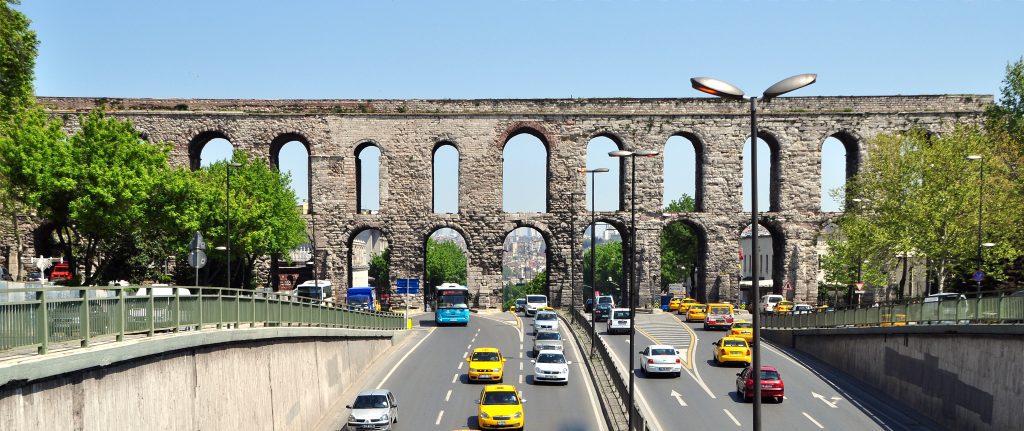
Today, the monumental structure still spans Atatürk Boulevard, standing as a reminder of the sophisticated infrastructure that supported life in Byzantine Constantinople.
History of Valens Aqueduct
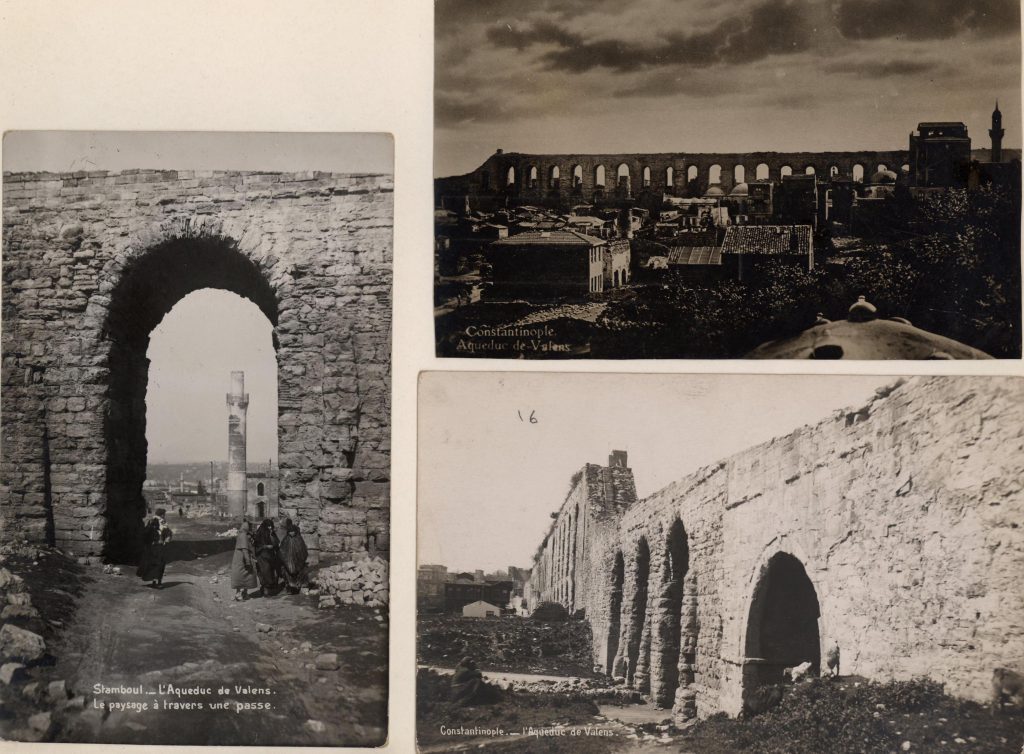
The aqueduct was constructed between 368 and 373 AD during the reign of Eastern Roman Emperor Valens (364–378).
As Constantinople grew into a major imperial capital, the demand for fresh water increased dramatically. To solve this problem, the Romans developed an extensive system of aqueducts, channels, and reservoirs that brought water from forests and springs outside the city.
Valens Aqueduct became one of the most important components of this water supply network.
The system continued to function throughout the Byzantine period and remained in use during the Ottoman era, when it was repaired and maintained by several Ottoman sultans.
Despite the passage of centuries, a large section of the aqueduct still survives today.
Architecture of the Aqueduct
Valens Aqueduct was originally about 971 meters long, although parts of the structure were damaged or demolished over time.
The surviving section measures approximately 921 meters, only slightly shorter than the original length.
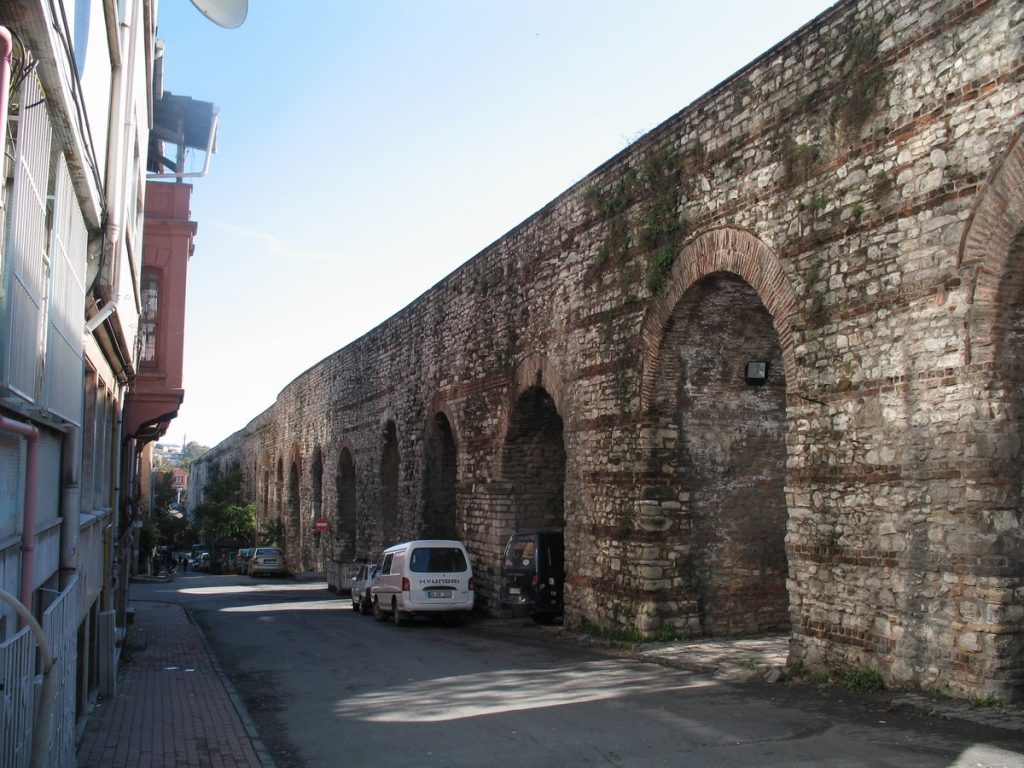
The aqueduct was built using a combination of stone and brick, a typical construction method in Roman and Byzantine architecture.
Rising to a height of around 29 meters, the structure features multiple rows of arches that carried the water channels across the valley between the third and fourth hills of Istanbul.
These arches allowed water to flow smoothly through the system while maintaining the necessary gradient.
Role in Constantinople’s Water System
The aqueduct formed part of a sophisticated water supply network that transported water from sources located far outside the city.
Water was carried through pipes, underground channels, and open aqueducts into large reservoirs and cisterns inside Constantinople.
From there, it supplied public baths, fountains, palaces, and private homes, supporting the daily life of the city’s population.
This infrastructure demonstrates the advanced engineering knowledge of the Roman and Byzantine civilizations.
Quick Facts About Valens Aqueduct
Location: Fatih district, Istanbul
Built: 368–373 AD
Commissioned by: Emperor Valens
Original Length: 971 meters
Remaining Length: Approximately 921 meters
Height: About 29 meters
Construction Material: Stone and brick
Function: Part of Constantinople’s water supply system
Best Time to Visit Valens Aqueduct
The aqueduct can be viewed at any time of day since it stands above a major road in the Fatih district.
Morning and late afternoon provide better lighting conditions for photography.
Because the structure stretches across the street, it is often seen while exploring nearby neighborhoods or traveling through the historic peninsula.
How to Reach Valens Aqueduct
Valens Aqueduct is located in the Fatih district of Istanbul and crosses Atatürk Boulevard.
By Tram
Visitors can take the T1 Tram Line to Aksaray Station and walk toward the aqueduct.
By Metro
The nearest metro station is Vezneciler (M2 Line).
Walking
The aqueduct can also be reached by walking from Suleymaniye Mosque or nearby historic neighborhoods.
Nearby Attractions
Several important historical sites are located near Valens Aqueduct.
Suleymaniye Mosque
A masterpiece of Ottoman architecture designed by Mimar Sinan.
Grand Bazaar
One of the largest covered markets in the world.
Beyazit Square
A historic square dating back to the Byzantine period.
Istanbul Archaeology Museums
A museum complex displaying artifacts from ancient civilizations.
FAQ
What is the Valens Aqueduct?
Valens Aqueduct is a Roman aqueduct built in the 4th century to supply water to the city of Constantinople.
Who built the aqueduct?
The aqueduct was commissioned by Emperor Valens during the Eastern Roman Empire.
How long is Valens Aqueduct?
The original length was about 971 meters, while around 921 meters survive today.
Is Valens Aqueduct still in use?
No. The aqueduct is no longer used for water transport but remains an important historical monument.
Things to Know Before Visiting Valens Aqueduct
The aqueduct stretches across Atatürk Boulevard in the Fatih district.
It can be easily seen while exploring nearby historical areas.
The structure is one of the most impressive surviving Roman engineering works in Istanbul.
Visiting the aqueduct can be combined with trips to Suleymaniye Mosque and Beyazit Square.
Browse The Map
Reviews And Comments
Suggested Listings
Great Palace Mosaics Museum

Istanbul Archaeology Museums

Turkish and Islamic Arts Museum Istanbul

Not rated yet.
Why don't you register your impressions?