


Contact
- Binbirdirek Mah. İmran Öktem Cad. 34122 Fatih / İSTANBUL
- info@allabouturkiye.com
- binbirdirek.com.tr
| MMonday | 10:00 AM - 17:00 |
| TTuesday | 10:00 AM - 17:00 |
| WWednesday | 10:00 AM - 17:00 |
| TThursday | 10:00 AM - 17:00 |
| FFriday | 10:00 AM - 17:00 |
| SSaturday | 10:00 AM - 17:00 |
| SSunday | Closed |
Cistern of Philoxenos (Binbirdirek) – A Hidden Byzantine Reservoir in Istanbul
Beneath the historic streets of Istanbul lies a remarkable underground monument known as the Cistern of Philoxenos, or locally Binbirdirek Cistern. Located near Sultanahmet and across from the Istanbul Courthouse, this ancient structure is one of the lesser-known yet fascinating remnants of the Byzantine water system.
Although it is often overshadowed by the famous Basilica Cistern nearby, Binbirdirek offers visitors a unique opportunity to explore one of the largest underground cisterns built during the Byzantine period. With its impressive forest of marble columns and quiet atmosphere, the cistern reveals an important chapter of Istanbul’s engineering and architectural history.
Today, the Cistern of Philoxenos stands as a hidden historical gem waiting to be discovered by travelers interested in the deeper layers of the city’s past.
History of the Cistern of Philoxenos
The Cistern of Philoxenos was constructed during the late Roman and early Byzantine periods, likely in the 4th or 5th century.
Historical sources suggest that the cistern was commissioned by Philoxenos, a senator of Constantinople, to support the growing water needs of the imperial palace and surrounding structures after the Roman capital was moved to Constantinople.
Like many large cisterns built during the Byzantine era, the structure formed part of the sophisticated water distribution system that supplied the city. Water was transported into the cistern through a network of aqueducts and channels that carried water from sources outside the city.
Over the centuries, the cistern gradually fell out of use and was eventually forgotten beneath the expanding city. For many years it remained hidden under layers of urban development.
It was rediscovered during the 1960s, bringing renewed attention to one of the largest surviving underground cisterns in Istanbul.
Architecture of Binbirdirek Cistern
The Cistern of Philoxenos measures approximately 64 by 56 meters, making it one of the largest Byzantine cisterns in the city.
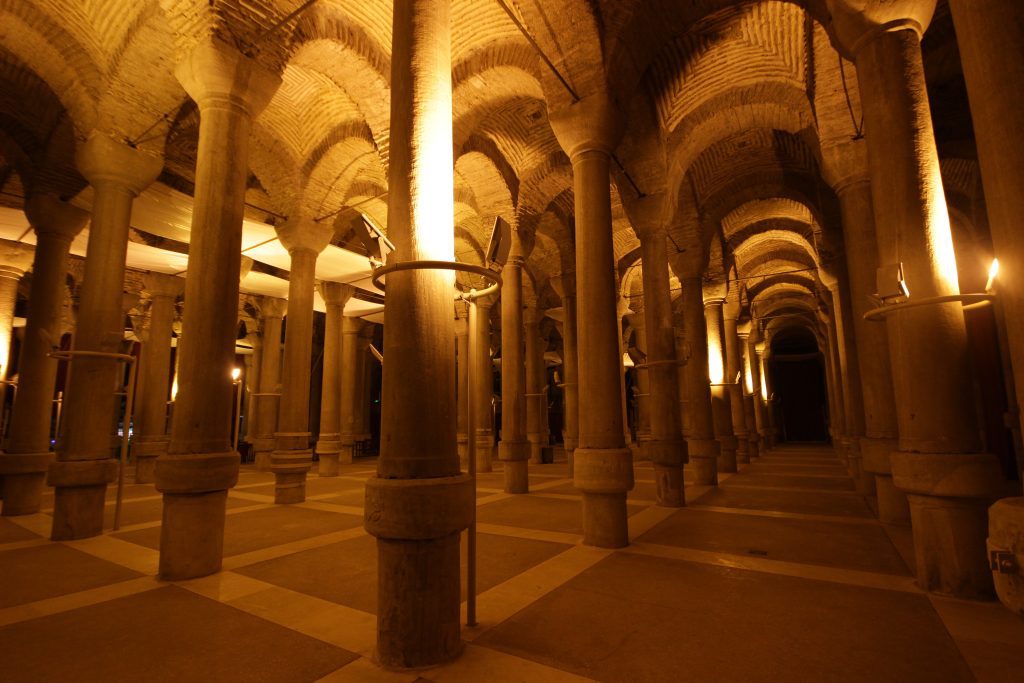
Inside the structure, visitors encounter an impressive arrangement of 244 marble columns supporting the massive vaulted ceiling. These columns are connected by arches that help distribute the weight of the roof across the structure.
The ceiling itself is built using cross-vaulted brick architecture, a typical construction technique of the Byzantine period.
The name Binbirdirek, which translates roughly as “a thousand and one columns,” refers to the forest-like appearance created by the many pillars inside the cistern. Although the actual number of columns is lower, the nickname perfectly captures the visual impact of the structure.
Walking through the cistern reveals a mesmerizing play of light and shadow among the columns. The underground environment, combined with the soft echoes and cool air, creates a mysterious and atmospheric setting.
Binbirdirek Cistern Today
Unlike the more famous Basilica Cistern, Binbirdirek Cistern is generally quieter and less crowded. This makes it an appealing destination for visitors who want to explore Istanbul’s historical layers away from the busiest tourist sites.
Over the years, the space has occasionally been used for cultural exhibitions and events due to its dramatic architectural setting.
Today, the cistern remains an important historical monument that reflects the remarkable engineering achievements of Byzantine Constantinople.
For travelers interested in discovering Istanbul’s hidden corners, Binbirdirek offers a fascinating and peaceful underground experience.
Quick Facts About the Cistern of Philoxenos
Location: Sultanahmet district, Istanbul
Local Name: Binbirdirek Cistern
Built: Late Roman / Early Byzantine period
Dimensions: 64 × 56 meters
Columns: 244 marble columns
Structure: Cross-vaulted ceiling supported by arches
Original Purpose: Water storage for imperial buildings
Status: Historical monument open for visits and events
Best Time to Visit Binbirdirek Cistern
The cistern can be visited throughout the year. Because it is less crowded than many nearby attractions, visitors can often explore the space comfortably at almost any time of day.
However, late morning and early afternoon usually provide the best lighting conditions for photography.
Spring and autumn are particularly pleasant seasons to explore Istanbul’s historic peninsula, as the weather is ideal for walking between nearby landmarks.
How to Reach the Cistern of Philoxenos
The cistern is located in the historic Sultanahmet district, close to several of Istanbul’s major monuments.
By Tram
Take the T1 Tram Line and get off at Sultanahmet Station. From there, the cistern can be reached with a short walk.
By Metro
Visitors can take the Marmaray line to Sirkeci Station and continue by tram or on foot.
Walking
If you are visiting nearby landmarks such as Hagia Sophia or the Basilica Cistern, Binbirdirek Cistern is within easy walking distance.
Nearby Attractions
Several of Istanbul’s most famous historical sites are located close to the Cistern of Philoxenos.
Basilica Cistern
The largest and most famous underground cistern of Byzantine Constantinople.
Hagia Sophia
A monumental structure that reflects both Byzantine and Ottoman architectural traditions.
Blue Mosque
One of Istanbul’s most iconic mosques, known for its impressive domes and six minarets.
Hippodrome of Constantinople
The ancient center of Byzantine public life and chariot races.
Why Visit the Cistern of Philoxenos?
The Cistern of Philoxenos offers a rare opportunity to experience one of Istanbul’s lesser-known historical monuments. While the city is famous for its grand mosques and palaces, underground structures like Binbirdirek reveal the hidden infrastructure that once sustained the Byzantine capital.
Its forest of columns, quiet atmosphere, and remarkable engineering make it a fascinating stop for travelers interested in the deeper layers of Istanbul’s history.
FAQ
What is the Cistern of Philoxenos?
The Cistern of Philoxenos, also known as Binbirdirek Cistern, is a large Byzantine underground water reservoir located in Istanbul.
Why is it called Binbirdirek?
The name means “a thousand and one columns,” referring to the many pillars supporting the cistern’s vaulted ceiling.
When was the cistern built?
It was likely constructed during the late Roman or early Byzantine period, around the 4th or 5th century.
Is Binbirdirek Cistern worth visiting?
Yes. It offers a quieter and less crowded alternative to other historic attractions while showcasing impressive Byzantine engineering.
Browse The Map
Reviews And Comments
Suggested Listings
Fethiye Mosque – Pammakaristos Church

Eyup

Tekfur Palace (Porphyrogenitus)

Not rated yet.
Why don't you register your impressions?